

Preparing a clear conference RFP template is one of the most important steps in selecting a conference management company, venue, production partner, or professional conference organizer.
A conference may involve hundreds of delegates, multiple speakers, parallel sessions, registration technology, technical production, accommodation, transportation, catering, sponsors, exhibitors, branding, and on-site staffing.
When these requirements are not documented properly, every shortlisted supplier may interpret the project differently. One proposal may include registration staff but exclude the registration platform. Another may include audiovisual equipment but exclude rehearsals, operators, or backup equipment.
A detailed conference request for proposal gives every bidder the same information, defines expected responsibilities, reduces assumptions, and helps corporate buyers evaluate costs, capabilities, timelines, and risks consistently.
This guide provides a practical, copy-ready structure for procurement teams, event managers, HR departments, marketing teams, associations, and conference committees.
For guidance on evaluating suppliers after proposals are received, read the Conference Management Company Selection Guide .
Preparing a conference request for proposal?
Share your destination, dates, delegate numbers, speakers, sessions, venue requirements, registration needs, production scope, accommodation, transportation, branding, sponsors, and budget.
Quick Answer: What Should a Conference RFP Template Include?
A complete document should include:
The document should also explain which responsibilities will remain with the internal team and which services the selected conference company must manage.

What Is a Conference RFP?
A conference RFP, or request for proposal, is a structured document sent to conference management companies, venues, production suppliers, registration providers, or professional conference organizers.
It asks shortlisted suppliers to recommend how they would plan and deliver the conference.
Strategic Response
- Understanding of objectives
- Recommended approach
- Venue strategy
- Delegate experience
- Conference timeline
Operational Response
- Registration solution
- Speaker management
- Production approach
- Logistics plan
- On-site staffing
Commercial Response
- Detailed budget
- Unit rates
- Management fees
- Payment terms
- Cancellation conditions
Capability Evidence
- Project team
- Relevant case studies
- Client references
- Risk controls
- Supplier network
RFP, RFQ, Conference Brief, and Supplier Quotation
Request for Proposal
An RFP asks suppliers to recommend an approach, service scope, project plan, team, timeline, and budget. It is suitable when capability and price must both be evaluated.
Request for Quotation
An RFQ asks suppliers to price a clearly defined service or product. It works best when the exact specifications and quantities are already known.
Conference Brief
A conference brief summarizes the objective, audience, destination, dates, venue, program, services, and budget. It may be used internally or included within the RFP.
Supplier Quotation
A quotation lists quantities, prices, taxes, terms, and exclusions. It may not contain a complete delivery strategy unless that information is requested.
Why a Detailed Conference RFP Matters
A complete conference planning RFP gives buyers and shortlisted suppliers a shared working framework.
What Happens When the Brief Is Incomplete?
Suppliers may assume:
- A smaller technical production setup
- Fewer registration or event staff
- No speaker travel or hotel coordination
- Limited registration functionality
- No sponsor or exhibitor management
- No technical rehearsals
- No airport transportation
- No backup equipment
- No detailed post-event reporting
1. Conference RFP Cover Page
The cover page should identify the project clearly and provide the main procurement dates.
Example Cover Page
Company: Example Global Holdings
Conference: Regional Leadership Conference
Document: Conference Management Services Request for Proposal
Issue Date: 8 February
Submission Deadline: 28 February
Supplier Presentations: 7 to 10 March
Expected Decision: 15 March
Proposal Validity: 90 days
Primary Contact: Corporate Events and Procurement Team
2. Company and Conference Background
Provide enough information for suppliers to understand the company, its audience, culture, internal stakeholders, and previous conference experience.
Company Information
- Company overview
- Industry
- Main products or services
- Geographic presence
- Number of employees or members
Conference History
- Previous destinations
- Previous attendance
- Previous event format
- Successful elements
- Areas requiring improvement
Current Project
- Reason for organizing
- Changes from previous editions
- Expected growth
- New audience groups
- Special operational needs
Internal Governance
- Internal project lead
- Procurement contact
- Marketing contact
- Senior stakeholders
- Final decision-maker
3. Conference Objectives
The objective should guide the supplier’s recommendations for the agenda, venue, registration process, delegate journey, production, staffing, and reporting.
Internal Objectives
- Leadership alignment
- Employee training
- Sales development
- Internal communication
- Recognition
Commercial Objectives
- Product education
- Client engagement
- Business development
- Partner networking
- Sponsor value
Industry Objectives
- Thought leadership
- Research presentation
- Industry education
- Association growth
- Member engagement
Example Measurable Objectives
- Communicate the company’s regional strategy to 400 managers.
- Train sales teams on a new product portfolio.
- Generate qualified meetings between sponsors and delegates.
- Improve association member participation.
- Deliver a consistent learning experience across three tracks.
- Achieve an attendee satisfaction score above 85 percent.
4. Event Overview
Include a summary table near the beginning of the conference RFP template so bidders can understand the main project requirements quickly.
| Requirement | Details to Provide |
|---|---|
| Conference name | Working or confirmed event name |
| Destination | City and country |
| Preferred dates | Main dates and acceptable alternatives |
| Conference duration | Number of conference days |
| Setup period | Required venue access before opening |
| Rehearsal period | Technical and speaker rehearsal time |
| Expected attendance | Minimum, working, and maximum estimates |
| Delegate profile | Employees, clients, partners, members, sponsors, or media |
| Event format | In-person, hybrid, or virtual |
| Venue type | Hotel, convention centre, resort, or another format |
| Breakout sessions | Number of rooms and expected capacity |
| Accommodation | Estimated rooms and nights |
| Budget range | Confirmed, estimated, or target range |
| Decision date | Expected supplier appointment date |
5. Delegate Profile and Attendance
Delegate information influences venue selection, registration, transportation, accommodation, catering, accessibility, language support, security, and staffing.
Delegate Categories
State whether different groups require separate registration flows, badges, seating areas, communication, hotel arrangements, or venue access.
- General delegates
- Executives
- Speakers
- Moderators
- Sponsors
- Exhibitors
- Media
- VIP guests
- Staff
- Virtual participants
6. Venue Requirements
General Requirements
- Preferred city area
- Airport and hotel access
- Venue category
- Main hall capacity
- Preferred seating layout
- Accessibility
Supporting Spaces
- Breakout rooms
- Registration area
- Exhibition space
- Sponsor area
- Speaker and VIP rooms
- Organizer office
Operational Requirements
- Storage
- Loading access
- Parking
- Internet capacity
- Security
- Transport pickup points
Commercial Information
- Room rental
- Minimum catering spend
- Setup charges
- Security and cleaning fees
- Overtime rates
- Cancellation terms
Main Conference Hall
For destination-specific support, review conference and exhibition solutions in Singapore and conference and exhibition solutions in Malaysia .
7. Agenda and Session Requirements
Provide a preliminary agenda even if some sessions are still being developed.
Session Information
For each session, provide where possible:
- Session title and format
- Expected attendance
- Duration
- Speaker and moderator count
- Stage layout
- Microphone requirements
- Presentation requirements
- Recording requirements
- Q&A format
- Interpretation requirements
Ask Suppliers to Review Operational Feasibility
The proposal should identify unrealistic transitions, insufficient buffer time, catering conflicts, room-capacity concerns, speaker overlaps, technical resets, delegate-flow issues, and transport conflicts.
8. Registration Requirements
Registration should be one of the most detailed parts of the conference request for proposal.
Online Registration
- Registration platform
- Public or private access
- Invitation codes
- Delegate categories
- Payment collection
- Session selection
Delegate Communication
- Confirmation emails
- Reminder emails
- Cancellation management
- Waiting lists
- Travel information
- Hotel information
On-Site Registration
- QR check-in
- Badge printing
- Self-service kiosks
- Walk-in registration
- Help-desk support
- Attendance tracking
Delegate Data
- Data ownership
- Storage location
- Access permissions
- Retention period
- Privacy notices
- Report formats
Registration Reports
9. Speaker and Moderator Management
Explain which speaker responsibilities will be retained internally and which responsibilities the selected partner must manage.
Moderator Requirements
- Moderator selection
- Moderator briefings
- Panelist coordination
- Discussion questions
- Timing control
- Audience Q&A process
- Backup moderator plan
10. Conference Production Requirements
Stage
- Stage dimensions
- Stage height
- Steps and safety rails
- Lectern
- Panel furniture
- Accessibility ramp
Audio
- Main sound system
- Lectern microphones
- Wireless microphones
- Headset microphones
- Audience microphones
- Audio recording
Visual
- LED screens
- Projection screens
- Confidence monitors
- Presentation laptops
- Video playback
- Camera feeds
Lighting
- Stage wash
- Speaker lighting
- Panel lighting
- Audience lighting
- Photography lighting
- Decorative lighting
Technical Crew
- Technical director
- Audio engineer
- Video engineer
- Lighting operator
- Presentation operator
- Stage manager and show caller
Backup Requirements
11. Presentation Management
Presentation management deserves a separate scope when a conference includes several speakers, multiple tracks, videos, specialist fonts, or confidential material.
Ask the Supplier to Explain
- How presentation files will be collected
- How incorrect formats will be handled
- How videos and fonts will be tested
- How the latest version will be identified
- How last-minute changes will be controlled
- How files will be transferred to breakout rooms
- How confidential content will be protected
- How backup copies will be maintained
12. Sponsor and Exhibitor Requirements
Sponsor Information
- Expected number of sponsors
- Sponsorship categories
- Logo placement
- Stage and digital branding
- Sponsored sessions
- Hospitality access
Exhibitor Information
- Expected number of exhibitors
- Booth sizes
- Floor plan
- Furniture
- Electricity and internet
- Lead scanning
Supplier Responsibilities
13. Accommodation Requirements
Hotel Reporting
- Room pickup report
- Rooming-list status
- Cancellation report
- No-show report
- VIP room status
- Speaker room status
- Final room-cost reconciliation
14. Transportation Requirements
Guest Transportation
- Airport transfers
- Flight tracking
- Meet-and-greet
- Group coaches
- Hotel shuttles
- Dinner transfers
Special Transportation
- Speaker transfers
- VIP vehicles
- Luggage vehicles
- Late-arrival support
- Backup vehicles
- Emergency transport
Required Transport Documents
15. Catering Requirements
Ask suppliers to show menu options, price per person, minimum numbers, service format, equipment, staffing, final-number deadlines, taxes, service charges, overtime, and cancellation conditions.
16. Branding and Communication
Pre-Event Communication
- Event identity
- Save-the-date
- Invitation design
- Registration page
- Confirmation emails
- Reminder emails
Conference Branding
- Presentation templates
- Stage branding
- Backdrops
- Directional signage
- Room signage
- Digital screens
Delegate Materials
- Name badges
- Lanyards
- Delegate folders
- Printed programs
- Mobile event information
- Sponsor branding
Event Content
- Photography
- Video
- Social media content
- Media permissions
- Interview areas
- Post-event content
17. Staffing and On-Site Management
Ask suppliers to provide a complete staffing structure rather than one general staffing cost.
For Every Role, Request
- Number of staff
- Working hours
- Responsibilities
- On-site dates
- Overtime rates
- Uniform requirements
- Communication equipment
- Reporting line
- Replacement plan
18. Risk and Contingency Requirements
Request a Practical Risk Plan
The supplier should provide:
- Risk register
- Likelihood and impact assessment
- Preventive actions
- Backup plans
- Responsible person
- Emergency contacts
- Communication procedures
- Escalation process
19. Reporting Requirements
Planning Reports
- Master action tracker
- Budget tracker
- Supplier tracker
- Registration reports
- Speaker tracker
- Risk register
Event-Day Reports
- Attendance report
- Registration issue log
- Speaker status
- Technical issue log
- Transport issue log
- Additional cost log
Post-Event Reports
- Final attendance
- Feedback summary
- Supplier review
- Budget reconciliation
- Final cost report
- Recommendations
20. Budget Instructions
Ask every bidder to use the same cost structure so proposals can be compared accurately.
| Cost Category | Required Breakdown |
|---|---|
| Venue | Rental, meeting rooms, setup, storage, security, and overtime |
| Catering | Meals, breaks, beverages, staff meals, taxes, and service charges |
| Production | Stage, sound, screens, lighting, recording, equipment, and crew |
| Registration | Platform, badges, equipment, staffing, and payment processing |
| Speakers | Fees, travel, accommodation, transfers, and technical needs |
| Branding | Design, printing, signage, backdrops, and digital materials |
| Staffing | Planning staff, on-site staff, working hours, and overtime |
| Accommodation | Rooms, breakfast, taxes, porterage, and upgrades |
| Transportation | Vehicles, drivers, parking, waiting time, and backup vehicles |
| Sponsors and exhibitors | Booths, furniture, internet, electricity, signage, and support |
| Management fees | Planning, coordination, documentation, and event delivery |
| Contingency | Recommended reserve and expected uses |
Require Bidders to Separate
The Corporate Event Cost Calculator can help internal teams prepare an initial budget before issuing the request.
21. Proposal Response Format
Require each bidder to follow the same structure.
Strategy and Approach
- Executive summary
- Understanding of the brief
- Recommended approach
- Venue recommendation
- Delegate-management plan
Conference Delivery
- Registration solution
- Speaker-management plan
- Agenda-management plan
- Production proposal
- Presentation-management process
Logistics and Operations
- Sponsor and exhibitor plan
- Accommodation plan
- Transportation plan
- Catering plan
- Staffing and risk plan
Commercial Response
- Project timeline
- Proposed team
- Detailed budget
- Assumptions and exclusions
- Case studies and references
22. Conference RFP Evaluation Criteria
Provide the evaluation criteria so suppliers understand how proposals will be assessed.
| Evaluation Area | Suggested Weight |
|---|---|
| Understanding of the conference brief | 15% |
| Relevant conference experience | 15% |
| Registration capability | 10% |
| Speaker and agenda management | 10% |
| Production solution | 15% |
| Venue and logistics planning | 10% |
| Budget transparency | 10% |
| Proposed project team | 5% |
| Risk management | 5% |
| Overall business fit | 5% |
| Total | 100% |
Weighting may be adjusted for technical conferences, association events, leadership meetings, hybrid conferences, international delegations, or procurement-led projects.
23. Conference RFP Timeline
Give suppliers enough time to review venue availability, contact subcontractors, develop layouts, prepare production specifications, and calculate costs.
RFP Issued
Release the complete document, appendices, response instructions, and confidentiality requirements.
Supplier Questions
Set one deadline for bidders to submit clarification questions.
Buyer Responses
Share the same consolidated answers with all participating suppliers.
Proposal Submission
Confirm the deadline, submission format, file-size limits, and required attachments.
Evaluation and Presentations
Review proposals, prepare clarification questions, and invite selected bidders to present.
Final Commercial Submission
Request revised prices or scope clarification after supplier presentations.
Selection and Contracting
Complete approvals, commercial negotiation, contract review, and supplier appointment.
Project Kickoff
Confirm the project team, timeline, action tracker, budget process, and communication structure.
24. Common Conference RFP Mistakes
Avoid These Common Problems
- No clear conference objective
- No minimum or maximum attendance range
- Missing budget guidance
- Vague production requirements
- No registration scope
- Missing speaker-management responsibilities
- No breakout-room details
- Unclear accommodation needs
- No standard proposal format
- No evaluation criteria
- Unrealistic supplier deadlines
- Too many open assumptions
No Clear Objective
Suppliers cannot recommend the right venue, agenda, production solution, or delegate experience without understanding the desired result.
No Attendance Range
Venue capacity, catering, staffing, registration, transportation, and production costs depend on the number of attendees.
Vague Production Requirements
Terms such as “standard audiovisual equipment” may mean different equipment and staffing levels to different suppliers.
No Registration Scope
Clarify whether the supplier must provide the platform, communication, payment collection, badges, check-in equipment, reporting, and on-site staff.
Unrealistic Deadlines
Allow enough time for venue checks, subcontractor quotations, production planning, layouts, and internal commercial review.
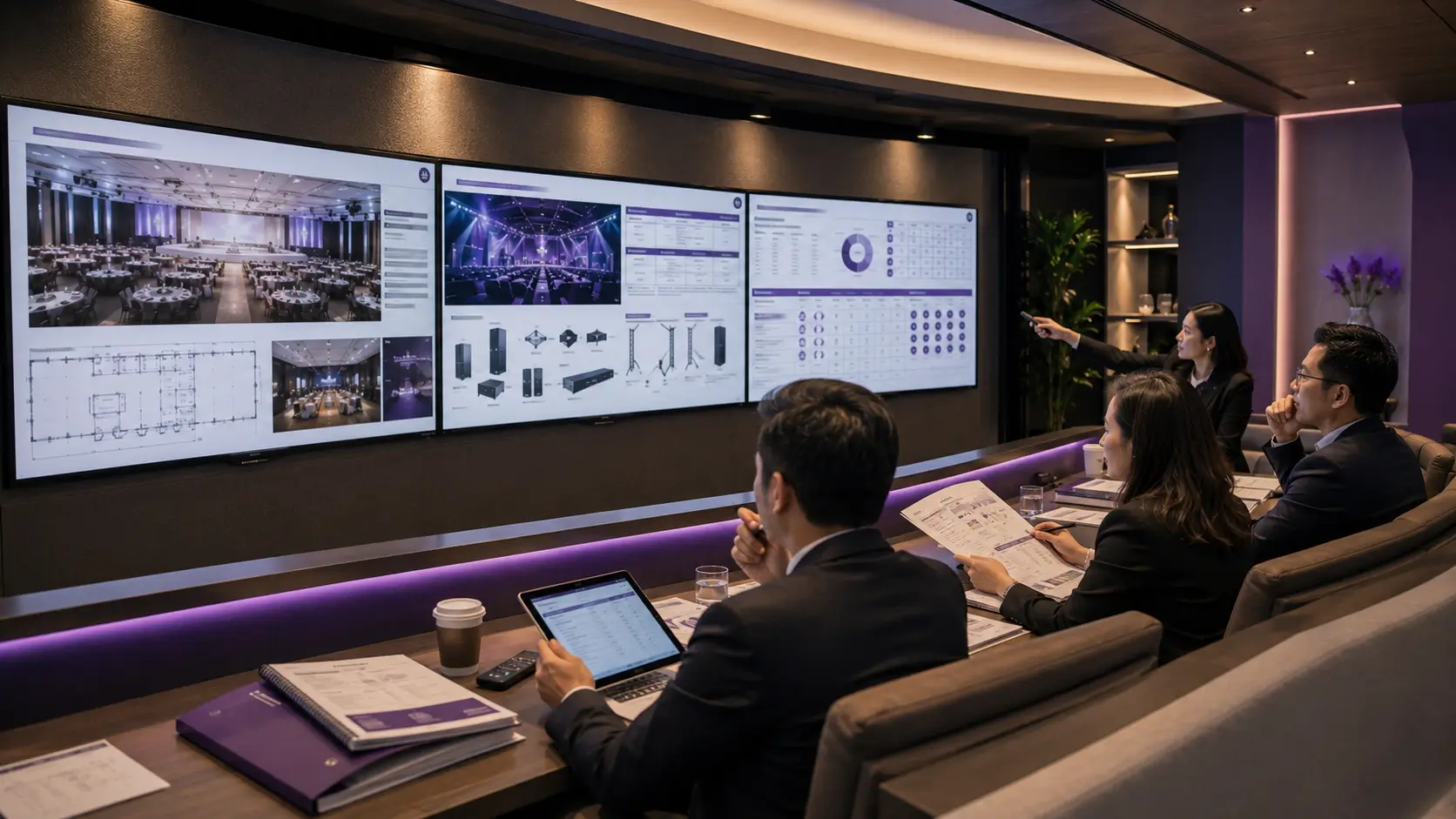
25. Copy-Ready Conference RFP Template
The following conference RFP template can be copied, edited, and sent to shortlisted conference management companies or professional conference organizers.
1. Company Background
Company name: Industry: Company overview: Previous conference experience: Internal project lead: Key stakeholders: Final decision-maker:2. Conference Overview
Conference name: Destination: Preferred dates: Alternative dates: Conference duration: Setup period: Rehearsal period: Expected attendance: Event format: Budget range:3. Conference Objectives
Primary objective: Secondary objectives: Delegate outcomes: Business outcomes: Success measures:4. Delegate Profile
Total attendance: Domestic delegates: International delegates: Countries of origin: VIPs: Speakers: Sponsors and exhibitors: Accessibility and language requirements:5. Venue Requirements
Preferred location: Main hall capacity and layout: Breakout rooms: Registration area: Exhibition and sponsor areas: Speaker and VIP rooms: Internet requirements: Loading, parking, and transport access:6. Conference Agenda
Attach or describe the preliminary agenda, including:
- Registration
- Opening session
- Keynotes
- Panels
- Workshops
- Breakout sessions
- Sponsor sessions
- Networking
- Catering breaks
- Closing session
- Technical and speaker rehearsals
7. Registration Requirements
Registration platform: Delegate categories and invitation codes: Payment requirements: Confirmation and reminder communication: Session selection: Badge printing and QR check-in: On-site help desk: Data ownership, privacy, and reporting:8. Speaker Management
Number and category of speakers: Invitations and confirmation tracking: Biographies, headshots, and session descriptions: Presentation deadlines: Travel, accommodation, and transfers: Briefings and rehearsals: Recording and photography consent:9. Conference Production
Stage and furniture: Sound and microphones: Screens, projection, or LED: Lighting: Recording and livestreaming: Interpretation: Technical crew: Backup equipment:10. Presentation Management
File submission method and deadline: Accepted formats: Speaker-ready room: File testing and version control: On-site edits: Confidential-content handling:11. Sponsors and Exhibitors
Number and categories: Booth sizes and floor plan: Furniture, electricity, and internet: Sponsor branding and sessions: Lead scanning: Deliverable tracking and reports:12. Catering
Coffee breaks and meals: Reception or gala dinner: Beverages: Halal, vegetarian, vegan, and allergy requirements: Speaker, VIP, staff, and driver meals: Final-number deadline:13. Accommodation
Number of rooms and nights: Hotel category and location: Room types: Rooming-list process: Release dates: VIP and speaker rooms: Cancellation and attrition terms:14. Transportation
Airport transfers and flight tracking: Meet-and-greet: Group coaches and hotel shuttles: Speaker and VIP transfers: Dinner or activity transfers: Backup and late-arrival support:15. Branding and Communication
Event identity and invitation design: Registration and email templates: Presentation templates: Stage branding and signage: Badges and digital screens: Photography, video, and social media:16. Staffing and On-Site Operations
Project and conference management roles: Registration and speaker-management staff: Production and stage-management staff: Sponsor, exhibitor, and logistics coordinators: Ushers, runners, and VIP coordinators: Emergency contact and replacement plan:17. Risk Management
Required risk register: Technical and internet failures: Speaker and supplier cancellation: Flight and transport disruption: Medical and security incidents: Schedule, room, and VIP changes:18. Reporting Requirements
Action and budget trackers: Registration and speaker reports: Sponsor and exhibitor reports: Risk and supplier reports: Event-day issue log: Final cost and post-event report:19. Budget Requirements
Require separate costs for:
- Venue
- Catering
- Production
- Registration
- Speakers
- Branding
- Staffing
- Accommodation
- Transportation
- Sponsors and exhibitors
- Management fees
- Contingency
20. Proposal Instructions
Require the proposal to include:
- Executive summary
- Understanding of the brief
- Recommended approach
- Venue recommendation
- Registration solution
- Speaker-management plan
- Production and logistics proposal
- Project timeline and team
- Risk plan
- Detailed budget
- Assumptions and exclusions
- Case studies and references
21. Evaluation Criteria
Understanding of the brief: Relevant experience: Registration and speaker management: Production and logistics: Budget transparency: Project team and risk management:22. Procurement Timeline
RFP issue date: Supplier questions deadline: Buyer response date: Proposal submission: Supplier presentations: Final commercial submission: Selection and contracting: Project kickoff:How to Compare Conference RFP Responses
After receiving proposals, review whether every bidder has answered each requirement and disclosed all assumptions.
Use the evaluation scorecard for written proposals before supplier presentations. During presentations, ask suppliers to explain their assumptions, operational approach, team structure, technical solution, and contingency plans.
Turn your conference RFP into a complete proposal
Share your objective, destination, dates, attendance, venue, sessions, speakers, registration, production, sponsors, accommodation, transportation, catering, branding, staffing, and budget.
How MiceMakers Can Support Your Conference
MiceMakers can help transform a corporate conference brief into venue options, supplier quotations, registration systems, production specifications, staffing plans, movement schedules, and a complete event budget.
MiceMakers provides event management services in Singapore and event management services in Malaysia .
Final Thoughts
A successful conference procurement process begins with a clear and detailed brief.
The conference RFP template should give every bidder the same event information, define expected responsibilities, request a consistent response format, and explain how proposals will be evaluated.
Corporate buyers should provide sufficient detail about delegates, venues, sessions, speakers, registration, production, accommodation, transportation, catering, sponsors, staffing, reporting, and budget expectations.
Where final details are not confirmed, state realistic working assumptions and ask suppliers to explain how a change would affect the scope, timeline, staffing, or budget.
A strong request for proposal does not need to contain every final operational decision. It should contain enough information for suppliers to understand the conference, recommend an appropriate solution, disclose assumptions, and prepare a transparent budget.
When all bidders respond to the same structured requirements, procurement teams can compare experience, service quality, technical capability, project teams, risks, and total value more accurately.
Ready to prepare your conference proposal?
Submit your conference requirements to MiceMakers and begin developing a structured proposal for Singapore or Malaysia.
FAQs About Conference RFPs
What is a conference RFP template?
It is a structured document used to request proposals from conference management companies, venues, production suppliers, registration providers, or professional conference organizers.
What should be included in a conference request for proposal?
Include the objectives, destination, dates, attendance, delegate profile, venue, agenda, registration, speakers, production, accommodation, transportation, catering, branding, staffing, reporting, budget, and response instructions.
What is the difference between a conference RFP and an RFQ?
An RFP asks suppliers to recommend a complete approach, team, service scope, timeline, and budget. An RFQ mainly asks for pricing based on a clearly defined specification.
Should the RFP include a budget?
Providing a confirmed budget or realistic range helps suppliers recommend appropriate solutions and reduces the risk of receiving proposals that cannot be approved.
How much time should suppliers receive to respond?
The timeframe depends on conference complexity. Suppliers need enough time to check venue availability, obtain subcontractor quotations, prepare technical options, develop layouts, and calculate costs.
Should all bidders use the same proposal format?
Yes. A common response structure makes it easier to compare the recommended approach, registration solution, production plan, staffing, logistics, assumptions, exclusions, and budget.
What production details should be included?
Include the stage, sound system, microphones, screens, lighting, presentation systems, recording, livestreaming, interpretation, technical crew, rehearsals, internet, and backup equipment.
Should speaker management be included?
Speaker responsibilities should be clearly assigned. They may include invitations, biographies, travel, hotels, presentation deadlines, technical requirements, briefings, rehearsals, stage access, and recording consent.
How should conference proposals be evaluated?
Use a weighted scorecard covering understanding of the brief, relevant experience, registration, speaker management, production, logistics, budget transparency, project team, risk management, and overall fit.
How can MiceMakers support the RFP process?
MiceMakers can transform a corporate conference brief into a complete proposal covering venue sourcing, registration, speakers, production, accommodation, transportation, sponsors, exhibitors, branding, staffing, on-site management, and reporting in Singapore and Malaysia.