

Choosing the right conference management company can determine whether a business conference feels organized, professional, and valuable or becomes difficult for speakers, delegates, suppliers, and internal teams to manage.
A conference is more complex than a standard corporate meeting. It may involve registration systems, multiple speakers, breakout sessions, technical production, sponsors, exhibitors, accommodation, transportation, catering, branding, and detailed event-day schedules.
The selected partner must coordinate all these elements through one structured conference plan.
This guide explains how to compare conference partners, which capabilities to evaluate, what questions to ask, which warning signs to avoid, and how to select a suitable company for conferences in Singapore or Malaysia.
For a broader overview of corporate event services, read the MICE Services Guide for Corporate Buyers .
Planning a conference in Singapore or Malaysia?
Share your destination, dates, delegate numbers, speakers, breakout rooms, venue requirements, registration needs, production scope, accommodation, transportation, branding, and budget.
Quick Answer: How Do You Choose a Conference Management Company?
Choose a conference management company by evaluating its relevant conference experience, understanding of your objectives, registration capabilities, speaker coordination process, production expertise, venue knowledge, supplier network, budget transparency, on-site staffing, communication quality, risk planning, and reporting system.
Do not compare proposals only by total price. Review the included services, outsourced responsibilities, proposed project team, technical solution, registration process, conference timeline, and contingency plans.
What Does a Conference Management Company Do?
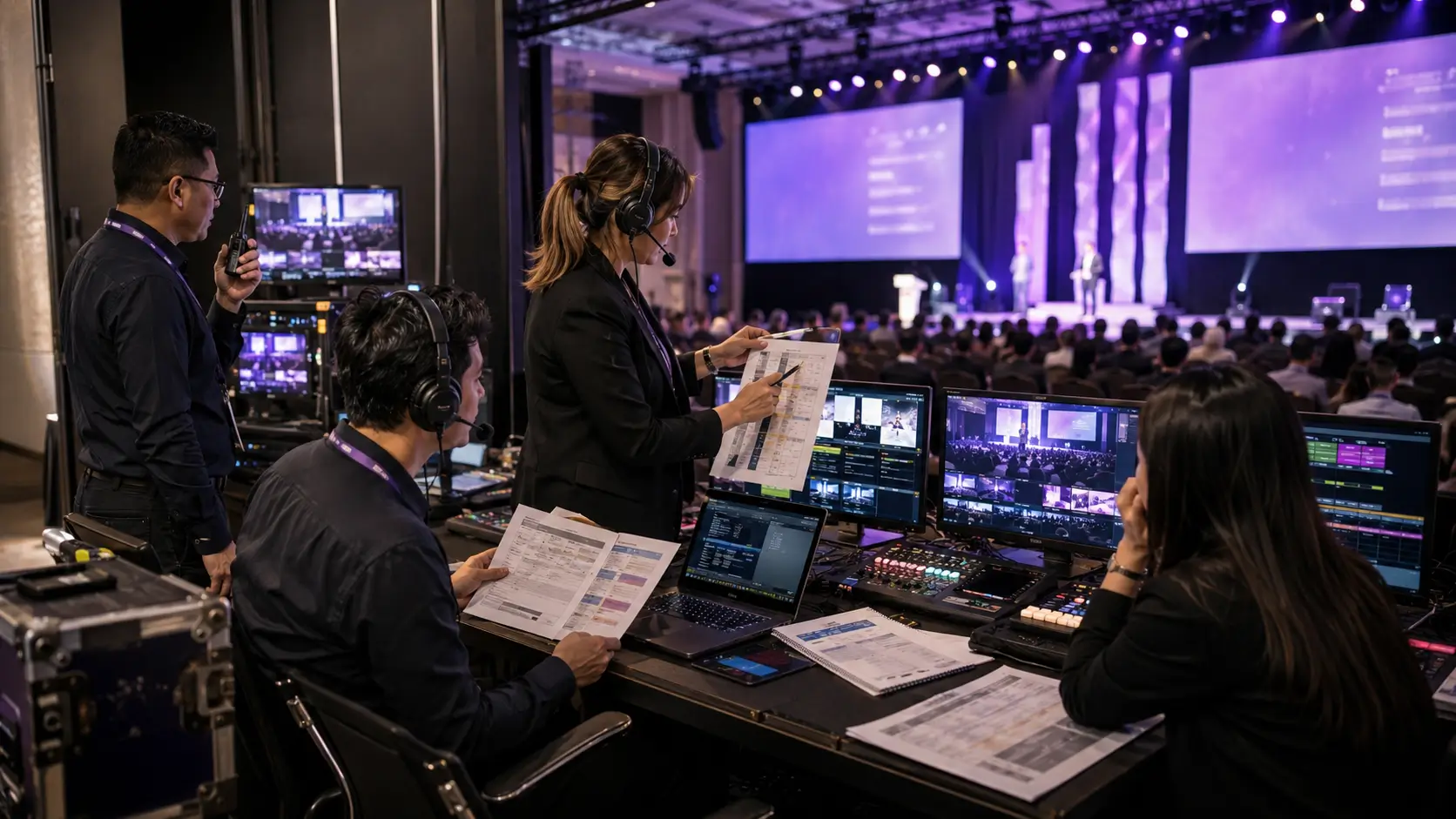
A conference management company plans, coordinates, and delivers the operational, technical, commercial, and guest-facing requirements of a professional conference.
Strategy and Planning
- Conference objectives
- Budget development
- Venue sourcing
- Project timelines
- Supplier coordination
Delegates and Speakers
- Registration
- Delegate communication
- Speaker coordination
- Agenda management
- Help-desk support
Production and Content
- Stage and AV
- Lighting and sound
- Presentation management
- Recording and streaming
- Technical rehearsals
Logistics and Delivery
- Accommodation
- Transportation
- Catering
- On-site staffing
- Post-event reporting
Some companies appoint one partner to manage the complete conference. Others retain internal control over content and marketing while outsourcing venue, registration, production, logistics, and event-day operations.
Responsibilities should be clearly defined before any contract is signed.
When Should You Hire a Conference Management Company?
External conference support becomes particularly useful when the event includes:
A specialist partner may support leadership summits, sales conferences, association events, industry forums, dealer meetings, medical conferences, educational forums, partner conventions, investor events, and annual corporate meetings.
1. Define the Conference Objective
Before comparing suppliers, define why the conference is being organized. The objective will influence the program, speakers, venue, production, communication, budget, and reporting.
Internal Business Objectives
- Employee training
- Leadership alignment
- Company strategy
- Sales development
- Employee engagement
External Business Objectives
- Client engagement
- Product communication
- Partner networking
- Thought leadership
- Industry education
Questions to Answer
- Who is the conference for?
- What should delegates learn?
- What action should attendees take afterward?
- What does senior management expect?
- Which sessions are essential?
- How will success be measured?
- Are sponsors, exhibitors, or media involved?
- Will the event be recorded or streamed?
2. Prepare a Detailed Conference Brief
A clear brief gives every shortlisted agency the same information and improves proposal accuracy.
Procurement teams can use the MICE Management Company RFP Guide to structure a formal request.
3. Check Relevant Conference Experience
Not every event agency has strong conference-management experience. An agency may be skilled in dinners, team building, launches, or incentive travel but have limited experience coordinating registration systems, speakers, technical rehearsals, and delegate flow.
Event Similarity
- Similar attendance
- Similar duration
- Similar venue format
- Similar destination
- Similar audience profile
Operational Similarity
- Multiple breakout tracks
- International delegates
- Sponsors and exhibitors
- Senior executives
- Complex stage production
Useful Evidence to Request
- Conference case studies
- Sample agendas
- Venue layouts
- Production photographs
- Registration reports
- Delegate communication examples
- Client references
- Post-event reporting samples
The most relevant example is not necessarily the largest conference. It is the event with operational requirements most similar to yours.
4. Evaluate the Conference Planning Process
A professional conference management company should be able to describe its complete project-management process.
1. Discovery and Objectives
Confirm the purpose, audience, expected outcomes, internal stakeholders, and decision-making process.
2. Conference Brief
Document the destination, dates, attendance, venue, agenda, speakers, services, budget, and approval timeline.
3. Budget and Proposal
Develop the initial solution, cost breakdown, assumptions, supplier options, and proposed project team.
4. Venue and Supplier Confirmation
Secure the venue, hotels, production, registration, transportation, catering, and supporting suppliers.
5. Registration and Delegate Planning
Build registration forms, communication schedules, badge requirements, reports, and on-site check-in procedures.
6. Speaker and Agenda Coordination
Confirm speakers, session descriptions, presentation deadlines, technical needs, and rehearsals.
7. Production Planning
Develop stage, AV, lighting, content, technical crew, internet, recording, and backup requirements.
8. Final Briefings and Rehearsals
Complete supplier briefings, technical rehearsals, staff schedules, transport plans, and risk reviews.
9. On-Site Delivery
Coordinate registration, sessions, speakers, catering, production, transportation, sponsors, and delegates.
10. Post-Event Reporting
Reconcile costs, review attendance, evaluate suppliers, collect feedback, and document recommendations.
5. Review Registration and Delegate Management
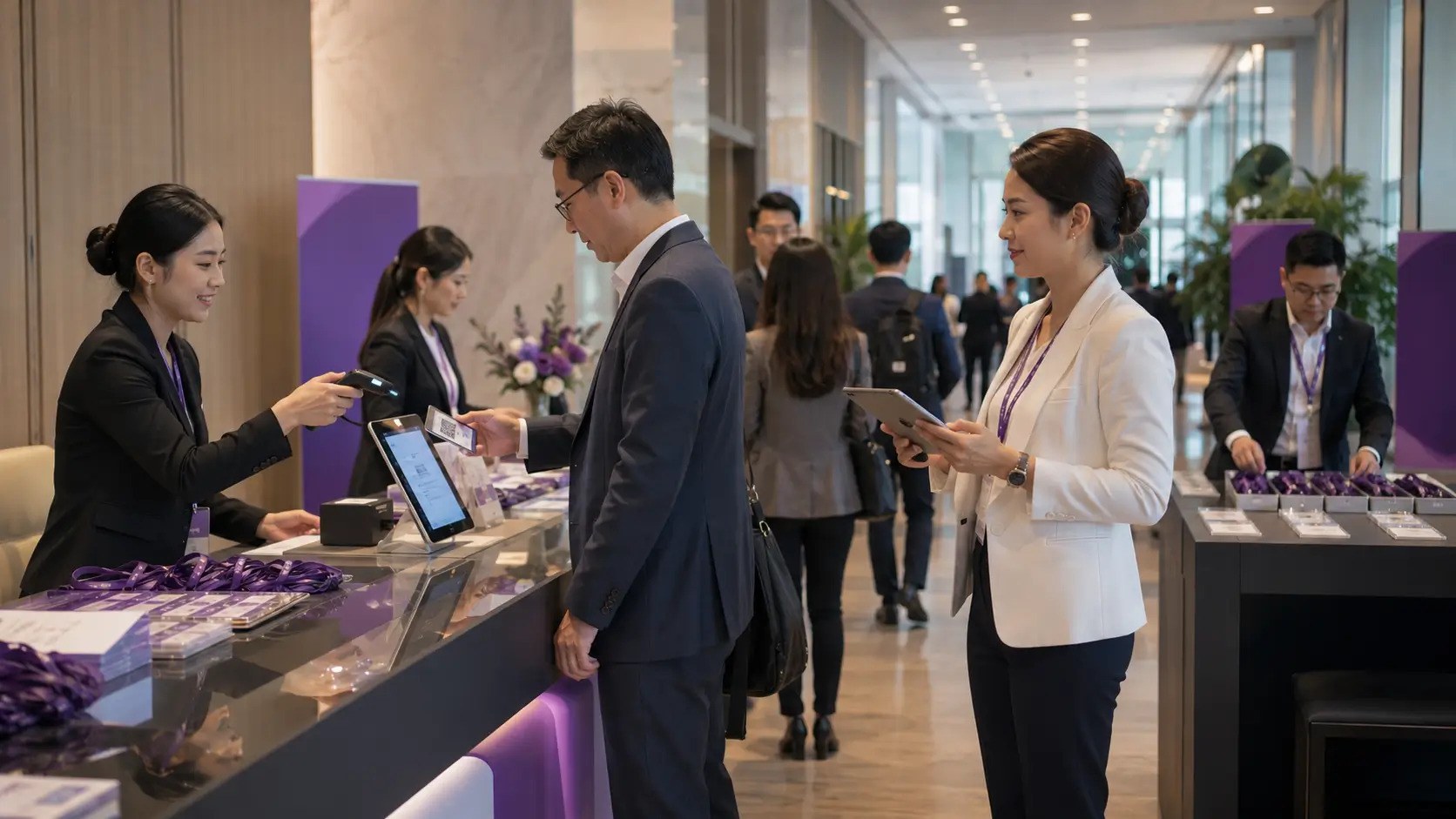
Registration is one of the most visible parts of a conference. A weak process can cause queues, inaccurate attendee records, missing badges, payment issues, and poor first impressions.
Before the Conference
- Registration forms
- Invitation codes
- Payment collection
- Confirmation emails
- Session selection
- Dietary information
On-Site Registration
- QR code check-in
- Name badges
- Registration counters
- Walk-in delegates
- Help-desk support
- Attendance tracking
Registration Questions to Ask
- Which registration platform will be used?
- Who owns and controls the attendee data?
- Can the system support different delegate categories?
- Can delegates select individual sessions?
- Can payments and invitation codes be managed?
- How often will registration reports be provided?
- What is the backup process if the system fails?
6. Assess Speaker Management
Speaker coordination requires more than collecting presentation files. It should cover communication, travel, rehearsals, stage requirements, technical preparation, and permissions.
Speaker Briefing Documents Should Include
- Session title and timing
- Presentation duration
- Q&A format
- Stage layout
- Microphone type
- Presentation format
- Arrival and rehearsal times
- Speaker-room location
- Main and emergency contacts
- Recording and photography information
7. Review Agenda and Session Management
A conference agenda should be operationally realistic, not only attractive on paper.
Build Buffer Time Into the Schedule
Account for delegate movement, speaker transitions, technical resets, catering queues, photography, breakout-room turnover, Q&A sessions, VIP arrivals, and possible overruns.
8. Evaluate Conference Production Capability
Conference production affects whether delegates can hear, see, and understand the content. The technical solution should match the venue, audience size, presentation format, and event objective.
Audio
- Main sound system
- Lectern microphones
- Wireless microphones
- Headset microphones
- Panel microphones
- Audience microphones
Visual
- Projectors
- Projection screens
- LED walls
- Confidence monitors
- Presentation laptops
- Video playback
Stage and Lighting
- Stage platform
- Lectern and furniture
- Backdrop and branding
- Speaker lighting
- Audience lighting
- Stage accessibility
Technical Management
MiceMakers provides conference and exhibition solutions in Singapore and conference and exhibition solutions in Malaysia .
9. Check Venue and Breakout-Room Planning
The venue should support the conference program and the movement of delegates, speakers, sponsors, suppliers, and staff.
Main Conference Space
- Main room capacity
- Seating layout
- Stage dimensions
- Screen visibility
- Sound restrictions
- Ceiling height
Supporting Rooms
- Breakout rooms
- Speaker room
- Green room
- VIP room
- Storage
- Technical control area
Delegate Areas
- Registration area
- Sponsor area
- Exhibition space
- Catering areas
- Networking areas
- Accessible routes
Operational Access
- Loading access
- Setup times
- Dismantling times
- Transport pickup points
- Parking
- Emergency exits
Review Delegate Flow
- Registration to the main hall
- Main sessions to breakout rooms
- Conference rooms to catering areas
- Exhibition spaces to conference sessions
- Hotels to venue transfers
- Networking areas to workshops
10. Assess Sponsor and Exhibitor Management
Sponsors and exhibitors may expect commercial, branding, hospitality, and reporting deliverables.
Sponsor Management
- Sponsorship packages
- Logo placement
- Speaking opportunities
- Sponsored sessions
- Hospitality access
- Deliverable tracking
Exhibitor Management
- Exhibition layouts
- Booth allocation
- Exhibitor manuals
- Setup instructions
- Electricity and internet
- Lead collection
Every sponsor and exhibitor deliverable should have an owner, deadline, approval status, and completion record.
11. Review Accommodation and Transportation
Accommodation
- Hotel category and location
- Number of rooms and nights
- Rooming-list process
- Release dates
- Speaker hotels
- VIP upgrades
- Attrition and cancellation terms
Transportation
- Flight tracking
- Airport transfers
- Group coaches
- Speaker transfers
- VIP vehicles
- Hotel-to-venue shuttles
- Backup vehicles
A master movement schedule should show every transfer, vehicle, pickup time, location, passenger group, driver, and responsible coordinator.
12. Check Budget Transparency
A conference proposal should separate the main cost categories so corporate buyers can compare services accurately.
| Cost Category | What to Review |
|---|---|
| Venue | Rental, meeting rooms, setup, security, storage, and overtime |
| Catering | Coffee breaks, lunch, beverages, dietary meals, and staff meals |
| Production | Sound, lighting, stage, screens, recording, and technical crew |
| Registration | Platform, badges, equipment, staff, and payment processing |
| Speakers | Fees, flights, hotels, transfers, and technical requirements |
| Branding | Signage, backdrops, badges, digital materials, and printing |
| Staffing | Project managers, registration staff, coordinators, and hosts |
| Accommodation | Rooms, breakfast, taxes, upgrades, and porterage |
| Transportation | Airport transfers, shuttles, VIP cars, parking, and waiting time |
| Sponsors and exhibitors | Booths, furniture, electricity, internet, signage, and support |
| Management fees | Planning, coordination, documentation, and on-site delivery |
| Contingency | Overtime, replacements, schedule changes, and emergencies |
The proposal should also state:
The Corporate Event Cost Calculator can help internal teams prepare a more complete budget before requesting proposals.
13. Ask About the Conference Team
The company name is less important than the people who will actually manage the event.
Questions About the Project Team
- Who will be the main contact?
- Who can approve operational changes?
- Who will manage suppliers?
- Who will control the conference schedule?
- Who will be available outside normal working hours?
- Will the planning team also work on-site?
- How many on-site staff are included?
- Which staff positions are charged separately?
14. Review Communication and Reporting
Conference planning involves a large number of decisions, updates, approvals, and deadlines.
Project Controls
- Status meetings
- Master action tracker
- Budget tracker
- Supplier tracker
- Approval log
Conference Reports
- Speaker tracker
- Registration reports
- Sponsor tracker
- Risk register
- Production schedule
Regular updates should clearly show decisions required, missed deadlines, budget changes, supplier status, registration numbers, speaker progress, production updates, sponsor deliverables, risks, and upcoming approvals.
15. Examine Risk Management
A professional conference organizer should identify operational risks and recommend practical responses.
Possible Conference Contingencies
- Backup laptop containing all presentations
- Spare microphones and replacement cables
- Alternative remote-speaker connection method
- Secondary internet connection
- Substitute moderator
- Flexible breakout-room allocation
- Backup transport vehicle
- Emergency medical contact
- Updated delegate communication templates
16. Questions to Ask a Conference Management Company
Experience and Team
- Have you managed conferences of this size?
- Have you handled similar technical requirements?
- Who will lead our project?
- Who will work on-site?
- Can you provide relevant case studies?
Registration and Speakers
- How do you manage registration?
- Which platform do you recommend?
- How do you coordinate speakers?
- How do you collect presentations?
- How do you manage breakout rooms?
Production and Suppliers
- Which production services do you provide?
- Which services are outsourced?
- How are suppliers controlled?
- How are rehearsals managed?
- What backup equipment is included?
Budget and Risk
- How do you control the budget?
- What is included in the management fee?
- What is excluded?
- How often will reports be provided?
- What contingency plans do you recommend?
17. Warning Signs to Avoid
- The proposal is generic and does not reflect the conference brief
- No clear conference timeline is provided
- The registration process is weak or undefined
- Speaker-management responsibilities are unclear
- The production scope lacks technical detail
- No named project manager is assigned
- The cost breakdown is incomplete
- Risk and backup planning are not discussed
- Delegate flow has not been considered
- The agency has no relevant conference examples
- Response times are slow or inconsistent
- Important services are left undefined
18. Use a Conference Management Company Scorecard
A structured scorecard helps corporate buyers compare every conference management company using the same criteria.
| Evaluation Area | Suggested Weight |
|---|---|
| Understanding of the conference brief | 15% |
| Relevant conference experience | 15% |
| Registration and delegate management | 10% |
| Speaker and agenda management | 10% |
| Production capability | 15% |
| Venue and logistics planning | 10% |
| Budget transparency | 10% |
| Project team and communication | 5% |
| Risk management | 5% |
| Overall business fit | 5% |
| Total | 100% |
Adjust the weighting according to the conference format. A technical event may prioritize production, while an association conference may place more weight on registration, sponsors, and exhibitors.
Conference Management in Singapore and Malaysia
Singapore and Malaysia offer different venue, accommodation, transport, production, and destination options.
Conference Planning in Singapore
- City-centre hotels
- Convention venues
- Airport transfers
- International delegates
- Premium production
- Regional leadership meetings
Conference Planning in Malaysia
- Kuala Lumpur
- Langkawi
- Penang
- Malacca
- Johor Bahru
- Kota Kinabalu
The selected partner should have practical destination knowledge, local supplier access, and on-site operational capability.
Explore event management services in Singapore , event management services in Malaysia , destination management in Singapore , and destination management in Malaysia .
How MiceMakers Supports Conferences
MiceMakers can support companies, associations, and conference committees with:
The final service scope can be adjusted according to your internal resources. Some companies require complete conference management services, while others need support only with venue sourcing, production, registration, logistics, or on-site delivery.
Plan your conference with MiceMakers
Share your conference objective, destination, dates, delegate numbers, speakers, sessions, venue, registration, production, accommodation, transportation, sponsors, branding, and budget.
Final Thoughts
The right conference management company should do more than book a venue and appoint suppliers.
It should understand the conference objective, coordinate delegates and speakers, manage production, control the agenda, organize suppliers, track the budget, prepare backup plans, and deliver the event through a clear operational structure.
Corporate buyers should compare relevant experience, registration capability, speaker management, production expertise, venue planning, communication quality, staffing, risk controls, and budget transparency.
The best conference partner is not necessarily the largest company or the agency with the lowest price. It is the partner that understands the brief, assigns a capable project team, communicates clearly, identifies risks early, and can manage the complete delegate journey from registration to post-event reporting.
Ready to start planning your conference?
Submit your conference requirements to MiceMakers and begin developing a structured plan for Singapore or Malaysia.
FAQs About Conference Management Companies
What is a conference management company?
A conference management company is a professional event partner that plans and coordinates venues, registration, speakers, agendas, production, accommodation, transportation, sponsors, exhibitors, branding, staffing, and on-site conference operations.
What services should a conference management company provide?
Services may include strategy, budgeting, venue sourcing, registration, speaker coordination, agenda management, production, catering, logistics, sponsors, exhibitors, staffing, risk planning, and reporting.
How do I compare conference management companies?
Give each company the same brief and compare relevant experience, registration processes, speaker management, production capability, venue planning, project staffing, budget clarity, communication, and risk controls.
When should I hire a conference planning company?
External support is useful for large conferences, multi-day programs, international delegates, several speakers, parallel sessions, sponsors, exhibitions, complex production, or events requiring extensive logistics.
What should be included in a conference proposal?
The proposal should include the recommended plan, venue, registration process, speaker support, production, logistics, project team, timeline, budget, assumptions, exclusions, payment terms, cancellation terms, and relevant experience.
How should conference speakers be managed?
Speaker management should cover confirmation, biographies, session descriptions, presentation deadlines, technical needs, travel, accommodation, transfers, briefing documents, rehearsals, stage access, and recording consent.
What should I check in a conference production proposal?
Review the sound system, microphones, screens, LED walls, lighting, stage, presentation management, recording, livestreaming, interpretation, technical crew, rehearsals, internet requirements, and backup equipment.
How many on-site staff does a conference need?
The required number depends on attendance, venue size, session structure, registration needs, transport, sponsors, production, and guest profile. The proposal should explain each role and responsibility.
Should conference registration be managed by the event company?
It can be. A conference company may manage registration forms, confirmations, payments, badges, QR check-in, help-desk support, dietary information, accessibility requests, and attendance reporting.
How can MiceMakers help with conference planning?
MiceMakers can support conference planning, venue sourcing, registration, speaker coordination, production, breakout rooms, accommodation, transportation, sponsors, exhibitions, branding, staffing, on-site operations, and post-event reporting in Singapore and Malaysia.