

MICE tourism and traditional business travel both move people for professional purposes, but they serve fundamentally different goals, require different planning, and deliver different outcomes. The MICE sector covers group events built around meetings, incentives, conferences, and exhibitions. Traditional business travel covers individual or small-group trips for client visits, sales calls, and internal meetings. Knowing the difference helps corporate planners allocate budgets more smartly and choose the right approach for each business objective.
What Is MICE Tourism?

MICE tourism is a form of corporate travel specifically designed around group business events, covering four pillars: Meetings, Incentives, Conferences, and Exhibitions. Each pillar serves a distinct purpose.
- Meetings cover structured corporate gatherings such as board sessions, strategy off-sites, and regional team meetings
- Incentives cover reward travel programs designed to motivate and retain top performers
- Conferences cover large-scale knowledge-sharing events, industry summits, and association conventions
- Exhibitions cover trade shows, product launches, and business expos
The Asia-Pacific MICE market is valued at USD 231.49 billion in 2026 and is forecast to reach USD 352.25 billion by 2031, growing at an 8.75% CAGR, according to Mordor Intelligence (2026). Southeast Asia is the fastest-growing sub-region, expanding at 12.41% CAGR to 2031, driven by strong momentum in Singapore, Malaysia, Thailand, and Indonesia.
MICE tourism is managed by specialist event agencies, destination management companies (DMCs), and professional conference organizers (PCOs). It requires significant lead time, custom programming, and structured post-event measurement.
What Is Traditional Business Travel?

Traditional business travel is individual or small-group corporate travel for operational business purposes, typically client visits, sales meetings, internal training, and partnership negotiations. It does not involve a structured group program, organized activities, or event-specific logistics.
Global business travel spending is forecast to reach USD 1.62 trillion in 2026, up 8.1% from 2025, according to the Global Business Travel Association (GBTA). In Asia-Pacific alone, business travel spend reached USD 679 billion by the end of 2025, a 10.9% increase on 2024, according to GBTA’s BTI Outlook 2025.
Traditional business travel is typically managed by a corporate travel management company (TMC), an internal travel manager, or booked directly by employees through self-booking tools. It runs on a reactive model: someone needs to be somewhere, a flight and hotel get booked, and the trip happens.
What Are the Key Differences Between MICE Tourism and Traditional Business Travel?
MICE tourism and traditional business travel differ across six core dimensions: purpose, group size, planning complexity, budget ownership, how outcomes are measured, and who manages the program. The table below captures these differences clearly.
| Factor | MICE Tourism | Traditional Business Travel |
|---|---|---|
| Primary purpose | Group engagement, incentive, and event | Individual meeting, client visit, training |
| Typical group size | 10 to 5,000 and above | 1 to 5 people |
| Planning lead time | 3 to 18 months | Days to a few weeks |
| Budget ownership | HR, Marketing, or Events team | Finance or Travel Manager |
| Managed by | Event agency, DMC, or PCO | TMC or direct booking |
| Outcomes measured | Engagement, ROI, ESG impact | Trip cost, mileage, productivity |
| Customization level | Highly designed program | Low, point-to-point logistics |
| Sustainability reporting | Increasingly standard | Emerging practice |
Singapore-Specific Audience Considerations
MICE tourism is designed to achieve a specific group outcome: reward top performers, align a regional leadership team, launch a product to 500 distributors, or train 300 new hires at once. Every element of the program supports that objective.
Traditional business travel is operational. It gets one person or a small team to where they need to be. The objective is the meeting itself, not the broader program built around it.
Planning Complexity and Lead Time
A 200-person incentive trip to Malaysia requires venue sourcing, hotel room blocks, ground transport, activity programming, catering, AV, and often visa support for international delegates. That takes 6 to 12 months minimum to execute well.
A two-person sales trip to a client in Bangkok takes two to three weeks to book from scratch.
Budget Structure and Ownership
MICE programs carry higher per-head costs because the value is built into the design of the experience. A well-structured incentive program or leadership conference delivers measurable business outcomes that justify the investment.
Traditional business travel runs on a cost-control model. The goal is to get the traveler there and back efficiently. Per-trip spend is tracked against policy limits, not against a business outcome framework.
Which Is More Cost-Effective: MICE Tourism or Traditional Business Travel?
Neither format is inherently more cost-effective. The right question is whether the format matches the objective. A structured MICE program costs more per head but generates outcomes that individual trips cannot.
A single sales conference bringing together 150 regional distributors creates alignment, product knowledge, and motivation that 150 individual sales visits could not replicate in the same time or at a lower total cost.
GBTA research found that every 1% increase in managed travel spending is associated with a 0.20% rise in revenue, and companies with strategically well-governed travel programs outperform peers by up to 30% in revenue. That applies across both formats when they are used with intent.
Where MICE Tourism Delivers Better ROI
- Incentive programs: Companies using structured incentive travel report measurably stronger sales force retention and performance. The Incentive Research Foundation (IRF) found that travel incentives produce 18% greater performance improvement than cash awards.
- Conferences and summits: A single well-run conference can generate pipeline, media coverage, partnership agreements, and brand positioning that no volume of individual meetings replicates.
- Large-scale training events: Training 500 people simultaneously in a structured environment costs less per outcome than 500 individual training trips.
Where Traditional Business Travel Delivers Better ROI
- Relationship-critical client meetings: Some deals only close face-to-face. For high-value one-to-one relationship building, a direct business trip is the right tool.
- Rapid-response travel: When a client issue needs immediate in-person attention, traditional business travel is the only viable format.
- Small team negotiations: Complex contract negotiations with two or three decision-makers do not benefit from group event infrastructure.
How Is MICE Tourism Managed Differently From Traditional Business Travel?
Group business events require a fundamentally different management structure from traditional business travel. The complexity, group size, and custom programming involved in MICE events demand specialist expertise that standard TMCs do not provide.
Who Manages MICE Tourism
A destination management company (DMC) is a specialist on-ground operator that handles all logistics within a destination: venues, transport, activities, accommodation, and supplier coordination. A DMC is the difference between a generic group trip and a precisely designed experience.
A professional conference organizer (PCO) manages large-scale conference logistics: speaker management, delegate registration, AV production, sponsorship, and event technology.
An event management company like MICE Makers covers the full spectrum, from initial program design and budget planning to on-site delivery and post-event reporting.
Who Manages Traditional Business Travel
A travel management company (TMC) handles policy-compliant flight and hotel bookings, expense management, and traveler duty of care. Major TMCs in Asia include CWT (Carlson Wagonlit Travel), BCD Travel, and American Express GBT.
For smaller companies, travel is often managed through self-booking tools such as Concur, TravelPerk, or direct corporate accounts with airlines and hotel chains.
The core distinction: MICE events require program designers who understand behavior, culture, and outcomes. Traditional business travel requires logistics managers who understand policy, cost, and compliance.
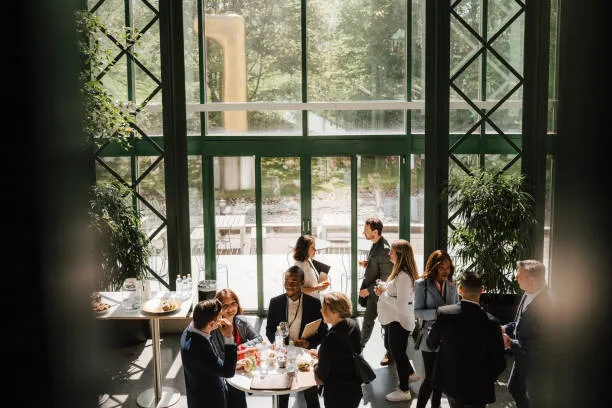
Why Is MICE Tourism Growing Faster Than Traditional Business Travel in Asia?
MICE tourism is growing faster than traditional business travel in Asia because it delivers outcomes that individual corporate travel cannot: group alignment, measurable engagement, and the kind of shared experiences that build culture across distributed teams.
Several structural factors are driving this gap in 2025 and 2026:
- Hybrid work has made in-person group events more valuable. When teams are distributed across Singapore, KL, Manila, and Jakarta, a structured group event is the only reliable mechanism for building cohesion at scale.
- ESG requirements favor structured group programs. MICE events produce measurable sustainability data: carbon footprint per delegate, waste diversion rates, and local procurement percentages. Traditional business travel produces individual trip data that is harder to aggregate into ESG reports.
- Asia-Pacific infrastructure investment is accelerating. Singapore retained its number one Cvent ranking for the eighth consecutive year in 2026. Malaysia secured 92 international business meetings under Visit Malaysia Year 2026. New MICE venues are opening across Sabah, Vietnam, and Sri Lanka.
- Hybrid event formats are expanding reach. Hybrid MICE events are growing at an 11.72% CAGR through 2031 in Asia-Pacific, according to Mordor Intelligence (2026), because they extend audience reach without proportionally increasing cost.
Traditional business travel is also growing, but at a more moderate pace, constrained by rising costs, sustainability pressure, and the increasing viability of video conferencing for routine meetings.
When Should Your Company Use MICE Tourism Instead of Business Travel?
Use MICE tourism when the objective requires a group to experience something together. Use traditional business travel when the objective requires one person or a small team to be physically present somewhere.
A practical decision framework:
Choose a MICE program when:
- You need to align, motivate, or reward a group of 10 or more people
- The outcome requires shared experience, such as a product launch, leadership retreat, or annual conference
- You need post-event data on engagement, ROI, or ESG impact for reporting
- The program involves multiple destinations, activities, or supplier categories
Choose traditional business travel when:
- One to five people need to attend a specific meeting or negotiation
- The trip is reactive and time-sensitive
- The objective is relationship maintenance with a single client or partner
- No group programming or shared experience is required
Use both formats together when:
- A conference brings 200 delegates to Singapore, but key decision-makers also need individual client dinners before or after the main event
- An incentive trip includes a structured group program alongside free time for bilateral business meetings
Most MNC teams in Singapore and Malaysia run both formats simultaneously. The companies that manage this most effectively treat MICE tourism and traditional business travel as complementary tools within a single corporate travel strategy, not as competing budget lines.
Planning a MICE Program in Singapore or Malaysia?
MICE Makers has been designing and managing MICE programs across Singapore and Malaysia since 2005. From incentive trips and conferences to corporate teambuilding and CSR events, we handle every element of program design, logistics, and post-event reporting. If you are weighing whether MICE tourism or a different format is right for your next program, our team can help you build the right brief from the start.
FAQ: MICE Tourism vs Traditional Business Travel
MICE tourism is group-based corporate travel built around a structured program such as a conference, incentive trip, or corporate event designed to achieve a specific group outcome. Traditional business travel is individual or small-group operational travel for meetings, client visits, or training without a structured shared experience.
MICE tourism generally carries higher per-person costs because value is created through custom-designed group experiences. However, these programs often deliver outcomes individual trips cannot, including alignment, engagement, and measurable ESG-related outcomes that improve overall return on investment.
MICE tourism programs are commonly managed by specialist providers including destination management companies (DMCs), professional conference organizers (PCOs), and full-service event agencies that handle strategy, logistics, and delivery. Traditional business travel is typically managed by travel management companies (TMCs) or internal travel teams.
MICE tourism is expanding rapidly because hybrid work has increased demand for intentional in-person experiences, sustainability reporting requires measurable event outcomes, and investment in Asia-Pacific event infrastructure continues to grow across major destinations.
Yes. Many organizations combine conference or incentive programs with individual meetings, client engagement, site visits, and other business travel activities under one integrated corporate travel strategy.
Companies with distributed teams, sales networks, channel partners, or ESG reporting requirements often gain the most value from MICE programs. These commonly include multinational corporations, financial services firms, pharmaceutical organizations, and technology companies operating across multiple markets.
Conclusion
MICE tourism and traditional business travel are not competing formats. They are complementary tools that serve different corporate objectives. MICE tourism delivers group outcomes at scale: alignment, motivation, knowledge transfer, and measurable engagement. Traditional business travel delivers individual presence where it matters most.
The companies that get the most from both are those that match the format to the objective deliberately, rather than defaulting to one approach for everything.
If your next program requires more than a flight and a hotel, MICE Makers has been building the right programs for corporate groups across Singapore, Malaysia, and Southeast Asia since 2005. Talk to our team to start planning.