

Sustainable MICE events in Malaysia are gaining serious momentum in 2026. Malaysia won “Best Destination for Meetings, Incentives, Conferences and Exhibitions” at the World Tourism Awards 2025, and Visit Malaysia Year 2026 puts sustainability at the heart of that recognition. Whether you are planning a conference in Kuala Lumpur, an incentive trip to Sabah, or a corporate retreat in Penang, this guide gives you 10 practical tips to make your event genuinely green, not just greenwashed.
Why Do Sustainable MICE Events Matter in Malaysia?
Sustainable MICE events matter in Malaysia because ESG compliance has moved from a nice-to-have to a hard requirement for multinational clients. Venue operators that cannot verify carbon footprints now risk exclusion from corporate RFP shortlists, according to Mordor Intelligence’s 2026 Asia-Pacific MICE Market Report.
Malaysia’s MICE industry generated an estimated RM1.63 billion in economic impact in 2025, with 230,284 local and foreign delegates attending business events, according to Meetings and Conventions Asia (2026). With Visit Malaysia Year 2026 underway and 92 international business meetings already secured as of January 2026, the pressure to deliver events that meet international sustainability standards has never been greater.
Green events also deliver direct business value for the companies hosting them:
- They reduce operating costs through lower energy and waste spending
- They strengthen ESG reporting with measurable event-level data
- They improve delegate perception and event NPS scores
What Is a Sustainable MICE Event in the Malaysian Context?
A sustainable MICE event in Malaysia minimises environmental harm, supports local communities, and produces outcomes that align with Malaysia’s National Tourism Policy 2020-2030 and ESG certification frameworks. The three pillars are environmental (carbon, energy, waste), social (local procurement, community benefit, inclusion), and governance (supplier accountability, transparent reporting).
In 2024, Malaysia launched its ESG certification for hotels and resorts through the Malaysian Association of Hotels, SGS Malaysia, and Sai Matrix Integrated. This framework gives MICE planners a clear set of certified properties to work with when building sustainable event programs.
10 Tips for Planning Sustainable MICE Events in Malaysia
Tip 1: Start With a Certified Venue
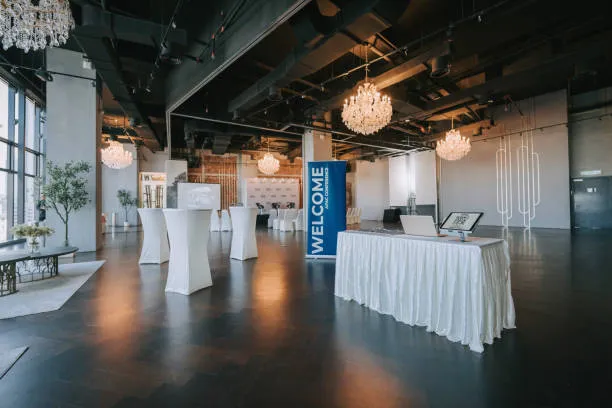
The venue sets the tone for your entire event sustainability strategy. In Malaysia, the Kuala Lumpur Convention Centre (KLCC) leads the way. KLCC earned ISO 20121 certification, making it Malaysia’s first purpose-built venue to meet international sustainable event management standards. It also holds Green Building Index (GBI) certification and is recognized as Asia’s first AIPC Gold-certified venue.
When shortlisting venues across Malaysia, check for:
- ISO 20121 event sustainability management certification
- Green Building Index (GBI) rating, Malaysia’s own green building standard
- In-house renewable energy systems, rainwater harvesting, or LED infrastructure
- On-site waste management programs
Beyond KLCC, venues in Penang, Johor Bahru, Kota Kinabalu, and Sarawak are rapidly building their sustainability credentials, particularly as Visit Malaysia 2026 drives investment in regional MICE infrastructure.
Tip 2: Calculate Your Carbon Footprint Early
Most event planners leave carbon measurement until after the event. That is the wrong approach. Calculate your estimated footprint before confirming your supplier list, because your choices at the planning stage have the greatest impact on the final number.
The three largest emission sources for any Malaysian MICE event are:
- International and domestic delegate travel
- Hotel accommodation energy use
- On-site catering and F&B production
Once you have a baseline estimate, use it to make smarter decisions: book hotels within walking distance of the venue, consolidate delegate flights into shared transfers, and prioritize local suppliers over imported ones. Planners who integrate virtual attendance options reduce travel-related emissions by up to 27%, according to Mordor Intelligence (2026).
Tip 3: Choose Hotels With ESG Certification
Accommodation accounts for 31.92% of MICE revenue share in Asia-Pacific, according to Mordor Intelligence (2026). For large groups, your hotel choices carry significant environmental weight.
Malaysia’s hotel ESG certification, launched in 2024 through the Malaysian Association of Hotels, gives event planners a verified list of properties meeting measurable environmental and social benchmarks. When recommending hotels for your delegates:
- Filter for MAH ESG-certified properties first
- Prioritize hotels within 1 km of your event venue to cut ground transport
- Ask for per-room energy consumption and water usage data
- For premium incentive groups, properties like Mandarin Oriental Kuala Lumpur, The St. Regis Langkawi, and Gaya Island Resort in Sabah lead on both sustainability credentials and delegate experience
Tip 4: Source Local and Seasonal Food
Catering is one of the highest-impact areas in any MICE event, and Malaysia has a genuine advantage here. Its food culture is rooted in fresh, local produce, with strong farm-to-table traditions in every region from Cameron Highlands to Sabah.
Practical steps for sustainable F&B in Malaysia:
- Ask your caterer for a local sourcing percentage, targeting 60% or more
- Design menus around seasonal and regional ingredients
- Reduce red meat-heavy options; plant-based and seafood menus carry significantly lower emissions
- Remove single-use plastics from all catering setups
- Partner with food banks like Food Aid Foundation Malaysia to redirect surplus food
This approach also taps into a genuine marketing angle for incentive groups. A dinner built around Malaysian heritage cuisine, sourced from local farms, tells a story that delegates remember.
Tip 5: Build a Hybrid Attendance Layer
Hybrid events combine in-person attendance with live online participation, cutting the number of long-haul flights required without reducing delegate reach. This is the single most effective way to reduce a large event’s carbon footprint.
For international conferences and incentive programs held in Malaysia, a hybrid layer means:
- Overseas speakers can present without flying in
- Regional satellite groups join from their own cities
- You expand your audience without expanding your carbon output
Malaysia’s AV and event technology ecosystem has matured significantly. Platforms like Zoom Events, Microsoft Teams Live Events, and local AV integrators across KL, Penang, and JB now support professional-grade hybrid setups with multilingual streaming and real-time Q&A.
Planning a Sustainable Event in Malaysia? MICE Makers Can Help
At MICE Makers, we have been organising corporate events, conferences, and incentive programs across Malaysia and Singapore since 2005. We manage everything from venue sourcing and green-certified hotel blocks to CSR team-building and post-event sustainability reporting, so your team can focus on the agenda, not the logistics. Whether your group is 20 or 1,000 people, we build programs that meet your ESG goals and deliver real impact for delegates.
Tip 6: Apply a Zero-Waste Event Framework
Zero waste means diverting at least 90% of event waste from landfill, not eliminating waste. A practical zero-waste framework for MICE events in Malaysia works across four stages.
Before the event:
- Switch to e-invites, QR-code agendas, and digital name badges
- Order printed materials and merchandise in exact quantities, no buffer stock
During the event:
- Set up clearly labelled recycling, composting, and general waste stations
- Brief all catering and operations staff on sorting protocols
After the event:
- Measure total waste generated versus diverted
- Include the data in your post-event sustainability report
Zero-waste checklist for Malaysia MICE events:
| Action | Estimated Impact |
|---|---|
| Digital agenda instead of printed | Saves 1–2 kg of paper per 100 delegates |
| Reusable lanyards and badge holders | Eliminates approximately 150g of plastic per delegate |
| Removal of single-use water bottles | Saves 500ml PET plastic per person per day |
| Food donation via Food Aid Foundation | Diverts 30–50% of surplus F&B from landfill |
| On-site recycling stations | Increases recycling rate by 15–25% |
Tip 7: Leverage Malaysia's Natural Destinations Responsibly
One of Malaysia’s strongest MICE assets is its extraordinary natural diversity: rainforests in Sarawak, marine parks in Sabah, hill stations in Cameron Highlands, and island resorts in Langkawi and Tioman. For incentive programs and corporate retreats, these destinations are unmatched in the region.
Using them responsibly means:
- Choosing nature-based activities with certified eco-tourism operators
- Limiting group sizes in sensitive natural areas
- Avoiding marine activities that damage coral reefs (no anchoring on reefs, no reef walking)
- Partnering with local indigenous community operators in Sarawak and Sabah
Sabah alone hosted 92 MICE events and 10,551 delegates in 2025, according to Meetings and Conventions Asia. The destination is actively growing its eco-tourism credentials, with programs like Alcon Korea’s incentive group combining seminars, island hopping, and a firefly river cruise designed with local community involvement.
Tip 8: Offset Residual Carbon With Certified Programs
After reducing emissions as far as practically possible, offset the remainder through certified programs. Offsetting is not a substitute for reduction, but it is a legitimate and expected part of any credible sustainability plan for a large MICE event.
Recommended offset frameworks for Malaysia-based events:
- Gold Standard: globally recognised, project-verified, accepted by most multinational ESG teams
- Verified Carbon Standard (VCS): widely used across Asia-Pacific corporate programs
- Malaysia-based reforestation programs: preferred for local brand alignment, particularly in Sabah and Sarawak, where certified forest conservation projects exist
Build offset costs into your event budget from the start. For a 300-person conference in Kuala Lumpur, residual offset costs typically range from RM2,000 to RM6,000, depending on the event’s travel and energy profile.
Tip 9: Embed CSR Teambuilding Into the Program

CSR teambuilding activities are the most direct way to address the social pillar of event sustainability. They convert passive attendees into active contributors and generate measurable community outcomes that sit directly in your post-event sustainability report.
Popular CSR teambuilding formats for MICE groups in Malaysia include:
- Building bicycles or school kits for underprivileged communities in urban KL
- Mangrove planting sessions on the Selangor coast or in Sabah
- Habitat restoration activities with wildlife conservation partners in Sarawak
- Coding and digital skills workshops for Orang Asli youth communities
- Community kitchen programs with local NGOs in Penang
At MICE Makers, we design and fully manage CSR teambuilding programs for groups from 20 to 1,000 people across Malaysia. Every program is logistically handled, impact-measured, and documented for your ESG report.
Tip 10: Measure, Report, and Improve Every Time
Post-event sustainability reporting is one area where most event agencies in Malaysia still underperform, and that makes it one of the clearest differentiators you can offer clients.
After every event, produce a concise sustainability report covering:
- Total carbon footprint versus industry benchmark
- Percentage of waste diverted from landfill
- Local procurement percentage across all suppliers
- Community benefit outputs from CSR activities
- Delegate travel data and hybrid attendance figures
Format it as a one-page PDF or an infographic your client’s sustainability team can drop directly into their annual ESG report. Clients who receive this kind of documentation are significantly more likely to rebook and more likely to give referrals.
Sustainable MICE Events Malaysia: Comparison Table
| Sustainability Action | Difficulty | Cost Impact | Environmental Impact |
|---|---|---|---|
| ISO 20121-certified venue | Low | Neutral | High |
| Carbon footprint measurement | Low | Low cost | High |
| ESG-certified hotel | Low | Neutral | High |
| Local F&B sourcing | Medium | Low cost | Medium |
| Hybrid attendance option | Medium | Moderate investment | Very high |
| Zero-waste framework | Medium | Cost saving | High |
| Responsible nature-based activities | Low | Neutral | High |
| Carbon offsetting | Low | Low cost | Medium |
| CSR teambuilding | Low | Low to moderate | High |
| Post-event reporting | Low | Low cost | Medium |
Ready to Plan Your Next Green Corporate Event in Malaysia?
Use our free Event Builder to describe your event in minutes. Tell us your group size, preferred destination in Malaysia, and sustainability goals. Our team will send you a tailored proposal with ESG-certified venue options, CSR activity ideas, and a full cost breakdown. No commitment. No long forms. Just fast, expert advice from a team that knows Malaysia inside out.
FAQ: Sustainable MICE Events in Singapore
A sustainable MICE event in Malaysia uses ESG-certified venues and hotels, minimises waste, sources food locally, reduces delegate travel through hybrid attendance options, and measures its carbon footprint against Malaysia's National Tourism Policy 2020–2030 sustainability frameworks.
Yes. The Kuala Lumpur Convention Centre (KLCC) holds ISO 20121 certification, making it Malaysia's first purpose-built MICE venue to meet international sustainable event management standards. It also holds Green Building Index certification and is Asia's first AIPC Gold-certified venue.
Kuala Lumpur leads in infrastructure and certified venues. Penang offers a strong local food culture and boutique venues. Kota Kinabalu and Sabah excel in nature-based incentive programs with genuine eco-tourism credentials. Kuching in Sarawak is growing rapidly as a green MICE destination for smaller conferences.
Yes. The Malaysian Association of Hotels, together with SGS Malaysia and Sai Matrix Integrated, launched an ESG certification program for hotels and resorts in 2024. This certification is part of Malaysia's National Tourism Policy 2020–2030 and gives event planners a verified list of certified properties to work with.
Build a hybrid attendance option so international speakers and remote delegates can participate without flying. Consolidate airport transfers, prioritise hotels within walking distance of the venue, and calculate your travel emissions baseline before confirming the delegate logistics plan.
Yes. CSR teambuilding activities directly address the social pillar of ESG, generating community outcomes such as charity contributions, habitat restoration, and community skills development. These outcomes, when documented, can be included directly in annual ESG reports and sustainability disclosures.
Conclusion
Planning sustainable MICE events in Malaysia is both achievable and commercially smart in 2026. The infrastructure is already being built: KLCC leads on ISO 20121 certification, the Malaysian Association of Hotels has launched its ESG program, and destinations from Sabah to Penang are investing in green MICE credentials under Visit Malaysia Year 2026.
Start with the fundamentals: choose a certified venue, measure your carbon footprint early, and build a zero-waste plan. Then add local F&B sourcing, a hybrid attendance layer, and CSR teambuilding to create events that go beyond the ballroom and deliver real value for your client’s ESG agenda.
MICE Makers has been delivering sustainable corporate events, teambuilding programs, and incentive trips across Malaysia and Singapore since 2005. Talk to our team to start planning your next green event.